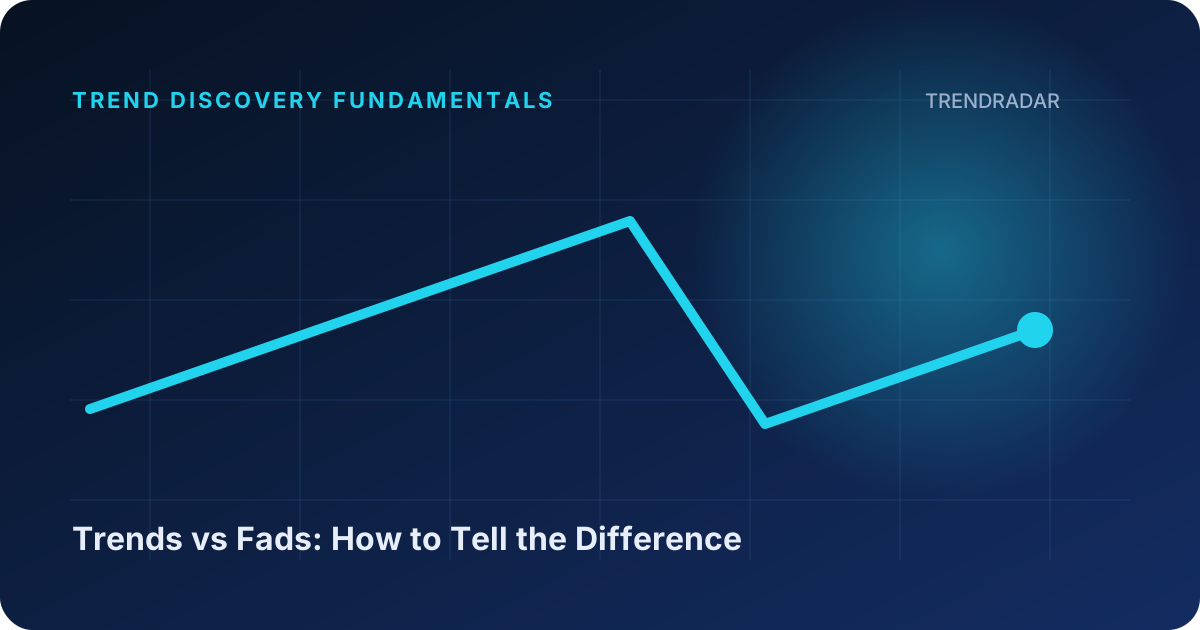
A fad is a burst of attention that fades with little lasting change. A trend is a shift in what people do, search for, buy or make that persists after the initial excitement. Both can start in exactly the same way, with a sudden jump in attention, which is why telling them apart early is hard. These five tests make it easier.
Test 1: Where does the baseline settle?
The most reliable test is what happens after the first peak. Look at a longer chart, such as several months in Google Trends Explore, and compare interest before the spike with interest after it.
- Fad: interest returns to roughly where it started.
- Trend: interest settles at a new, higher level, even if it falls from the peak.
A higher baseline means more people now care about the topic regularly. Because this test needs time, use it to review earlier decisions as well as to make new ones.
Test 2: Is behaviour changing, or only talk?
Ask whether people are doing anything differently: buying, learning, making, searching for how-to information or changing a routine. A catchphrase can be everywhere for three days without changing anything anyone does. A shift towards a new way of cooking, working or exercising shows up in purchases, tutorials and practical searches.
Practical searches ("how to", "best", "near me", "price") are a useful signal of behaviour behind the attention.
Test 3: How many contexts does it appear in?
Fads tend to live in one community, one format or one platform. Trends spread into different contexts: different age groups, countries, platforms or industries, each adapting the idea to their own use. Count the contexts you can find. One is a moment; several independent ones suggest something wider.
Test 4: What is causing it?
Find the driver.
- One-off causes such as a single viral video, a meme or one celebrity moment tend to produce fad-like spikes.
- Structural causes such as a new technology becoming cheaper, a change in regulation, a demographic shift or a new habit tend to support longer movement.
A one-off event can still start a trend, but the trend needs a deeper reason to keep going.
Test 5: Do new subtopics keep appearing?
Healthy trends branch. New questions, products, variations and vocabulary appear around the original topic over time. A fad stays the same thing and simply gets repeated until people tire of it. If the related queries around a topic are still changing weeks later, the idea is developing.
Speed is not the same as durability
Calling every fast-moving topic a fad is a common mistake. Speed describes how quickly attention arrived, not how long it will stay. Some durable trends start very suddenly, and some fads build slowly. Judge durability with the tests above, not by how fast the chart rose.
A practical way to decide
You rarely have to wait for certainty. Match the size of your commitment to the evidence:
- Early, only a spike: quick, low-cost content or simply monitoring.
- Spreading into other contexts, behaviour changing: a more considered piece or a small test.
- Higher baseline confirmed: evergreen content, product or strategy decisions.
An illustration
Imagine a dance challenge that dominates short-video platforms for a week and then disappears, with searches returning to zero: a fad. Over the same months, searches for a category of home exercise equipment rise, settle above their old level and keep generating new questions about routines and gear: a trend. Both would have looked like spikes at the start.
Where TrendRadar fits
TrendRadar shows how topics move over time by country, which helps with the baseline and spread tests. For reading the shape of a chart, see trend momentum explained. For the stages a trend moves through, read the trend lifecycle.
Free on iPhone and Android
Compare momentum instead of judging by volume alone
TrendRadar shows rising Google searches, YouTube videos and music charts for more than 100 countries, with a plain-language explanation of why each topic is moving.